Moving with Math®
Learning System
The evidence-based Moving with Math Learning System was developed over 40 years ago to empower teachers with an organized, systematic process to raise achievement for every student.
It is easy to use and streamlines classroom management by integrating standards-aligned assessments to direct data-driven, personalized Concrete-Representational-Abstract (CRA) instruction with continuous progress monitoring. The Learning System provides teachers with the structure and resources to build foundational skills, close learning gaps, and increase proficiency to grade-level standards.
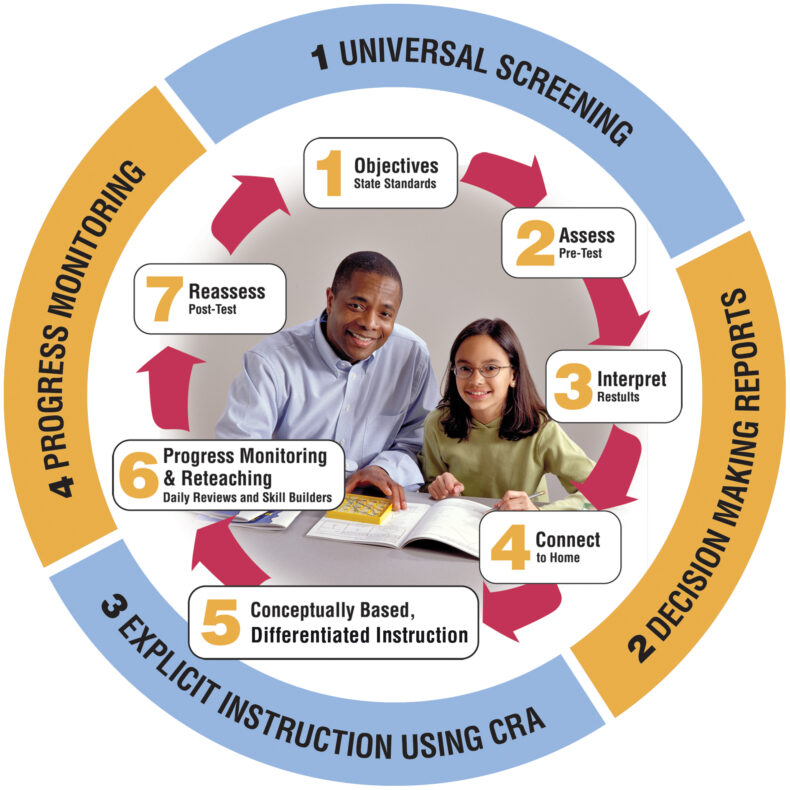
The Moving with Math® Learning System incorporates the four essential elements of intervention in a program that is easy to use and improves learning outcomes for all students.
Universal Screening • Decision-Making Reports • Explicit Research-Based Instruction • Progress Monitoring
Universal Screening
Moving with Math’s goal is to ensure that all children have access to high-quality instruction and that struggling learners are identified, supported, and served early and effectively.
1 Objectives Matched to Standards
Standards-based objectives make it easy for teachers to identify gaps in skills. Assessment objectives align with lesson plans, student activity books, and Skill Builders, which provide topic-specific practice and review.
Assessments are correlated to NCTM, CCSS and state standards.


2 Assess with Pre-Tests
Pre-test assessments identify learning gaps and provide teacher with a roadmap for data-driven instruction. Assessments can be taken online with a computer, tablet or with paper/pencil.
Decision-Making Reports
Decision-making reports provide objective, data-based evidence to personalize student learning, and serve as the backbone of a Multi-Tiered System of Support. (MTSS)
3 Interpret Results
Pre-test data clearly identifies student strengths and weaknesses and develops a variety of reports to make informed instructional decisions. Reports help teachers pinpoint individual student needs, develop IEPs or identify several students who might benefit from topic specific instruction in small groups.


Student Progress Report
An individual student progress report provides teachers with specific information by objective, to develop a learning plan and communicate progress with administrators and family..
4 Family Engagement
Family Math Connections booklets, available in English and Spanish, provide an important link between school and home, sharing students’ academic progress with parents and guardians. Booklets include activities that encourage family members to participate in their child’s math development and support them as they discover a road to success.

Explicit Research-Based Instruction
Research indicates that students using CRA instruction develop deeper conceptual understanding and higher retention rates because it bridges the gap between hands-on experiences and abstract mathematical thinking.

5 Research-Based CRA Instruction
The CRA instructional approach is an evidence-based framework proven to improve mathematical conceptual understanding and retention for diverse learners. CRA is recognized as an effective, research-based instructional model that effectively blends explicit instruction with an inquiry-based approach. It uses explicit, step-by-step teacher modeling and guided practice, while also fostering inquiry through hands-on, discovery-based exploration using manipulatives in the concrete stage, allowing students to build conceptual understanding before moving to abstract symbols. Research has shown CRA increases engagement, builds deep conceptual understanding and provides access for all learners, offering multiple entry points that cater to diverse needs, including students with learning disabilities and multilingual learners.
Comprehensive Lesson Plans Provide Daily Professional Development and Promote Teaching Excellence
A detailed lesson-plan structure and evidence-based strategies help teacher guide students from the Concrete through the Representational to the Abstract stage of learning supporting them in leading CRA instruction, even if they haven’t taught with manipulatives before.
Lesson plans save prep time, help teachers facilitate engaging hands-on activities, differentiate instruction, monitor progress, and implement the program with fidelity.
“The mathematical background of the teacher is the number one predictor of student success in the classroom.”
Effects of Teachers’ Mathematical Knowledge for Teaching on Student Achievement – 2005
Lesson Preparation Focuses Instruction
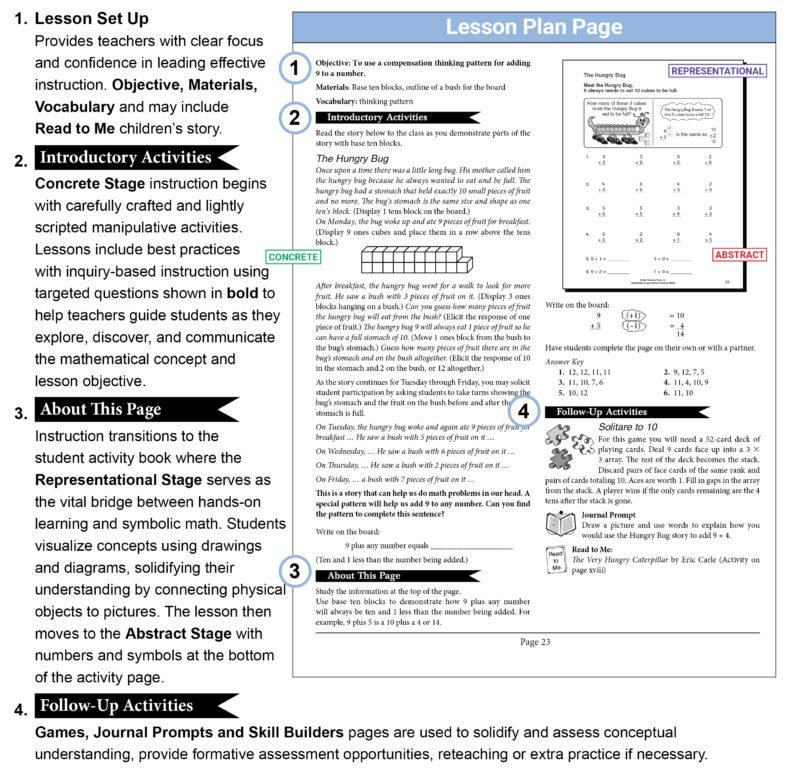
Each Moving with Math lesson is carefully structured to set both teachers and students up for success. Every lesson provides an objective, all necessary materials, and explicit academic vocabulary to support planning, pacing, and student access. The accompanying Teacher’s Guide includes a full glossary with definitions to ensure consistent and accurate vocabulary instruction.


Hands-On Introductory Activity
The introductory activity is the concrete stage where students begin to engage each of the three learning styles – visual, auditory and kinesthetic. Instruction begins with carefully crafted and lightly scripted manipulative activities. Lessons include best practices for inquiry-based instruction, using targeted questions in bold to help teachers guide students as they explore, discover, and communicate the mathematical concept and lesson objective. Students communicate the patterns they have discovered in several ways.
Representational is the Bridge to Abstract
Lessons ask students to communicate verbally, by drawing pictures and by writing with pencil and paper as they move to the representational and abstract stages in their student activity books. These activities reach out to students with various learning styles and assist them in their movement to the abstract stage of learning. Another benefit to this hands-on approach to learning is that every manipulative activity is a problem-solving experience.

and Abstract Stages of CRA in the Student Activity Book

Problem Solving in Every Lesson
Moving with Math teaches the mechanics of problem solving using a systematic five step plan to analyze a word problem and present it in meaningful real-world context. A variety of strategies to solve problems are explored and students become aware there are several ways to solve the same problem. This systematic approach helps builds student skills and confidence.
A Robust, Turn-Key Toolkit for Teachers
In addition to explicit CRA instruction, lesson plans also include Games and the Skill Builders. These activities are used to solidify and assess conceptual understanding, provide formative assessment opportunities and reteaching or extra practice.


Read To Me Brings Math into the Real World
Some lessons include Read to Me activities that tie children’s stories to the math being taught and help apply the mathematical concept in the real world. These stories also help develop vocabulary and aid in language acquisition as oral language skills are strengthened through small-group activities that enhance comprehension and foster curiosity.
Continuous Progress Monitoring
The Learning System integrates assessments for continuous progress monitoring to ensure understanding and support long-term retention.
6 Summative Assessments
Progress is monitored through Daily Reviews, weekly Check Points, Unit Quizzes and Benchmark Tests, which assess progress and identify reteaching needs. They also aid in long-term retention by continuously spiraling and reviewing previously learned objectives.

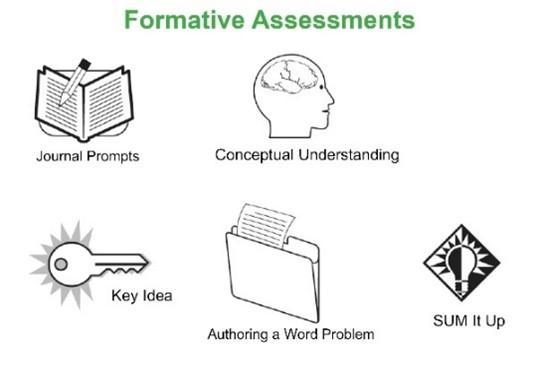
Formative Assessments
In addition to integrated summative assessments, lesson plans include a variety of formative assessment options to monitor fluency and gather evidence of mastery of objectives.
7 Reassess with Post-Tests
Post-tests are administered at the end of each part, or end of each book to measure progress and identify needs for further intervention.
Here is an example of the online individual student progress report comparing Pre-test, Benchmark and Post-test results. This report will show a student’s progress on each specific objective and help determine the next steps in the student’s learning plan.

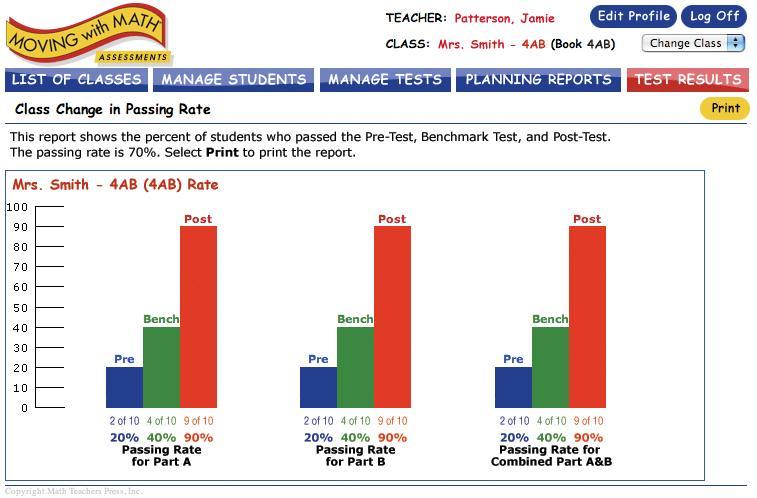
Assessment Data Can Develop Class, School and District Reports
In addition to the individual student data, the Moving with Math Online Assessment Suite also offers a variety of school and district-level reports to give administrators and curriculum leaders the broad, systemic data they need to evaluate program effectiveness, allocate resources, and make informed decisions about math instruction and intervention across the school or district.
Learning System Delivering Results
Lessons ask students to communicate verbally, by drawing pictures and by writing with pencil and paper as they move to the representational and abstract stages in their student activity books. These activities reach out to students with various learning styles and assist them in their movement to the abstract stage of learning. Another benefit to this hands-on approach to learning is that every manipulative activity is a problem-solving experience.